E-commerce
Tiendanube vs Custom Development: When Each Option Makes Sense for Selling Online
Compare Tiendanube and custom development by cost, control, scalability, maintenance, SEO, integrations, and business stage.
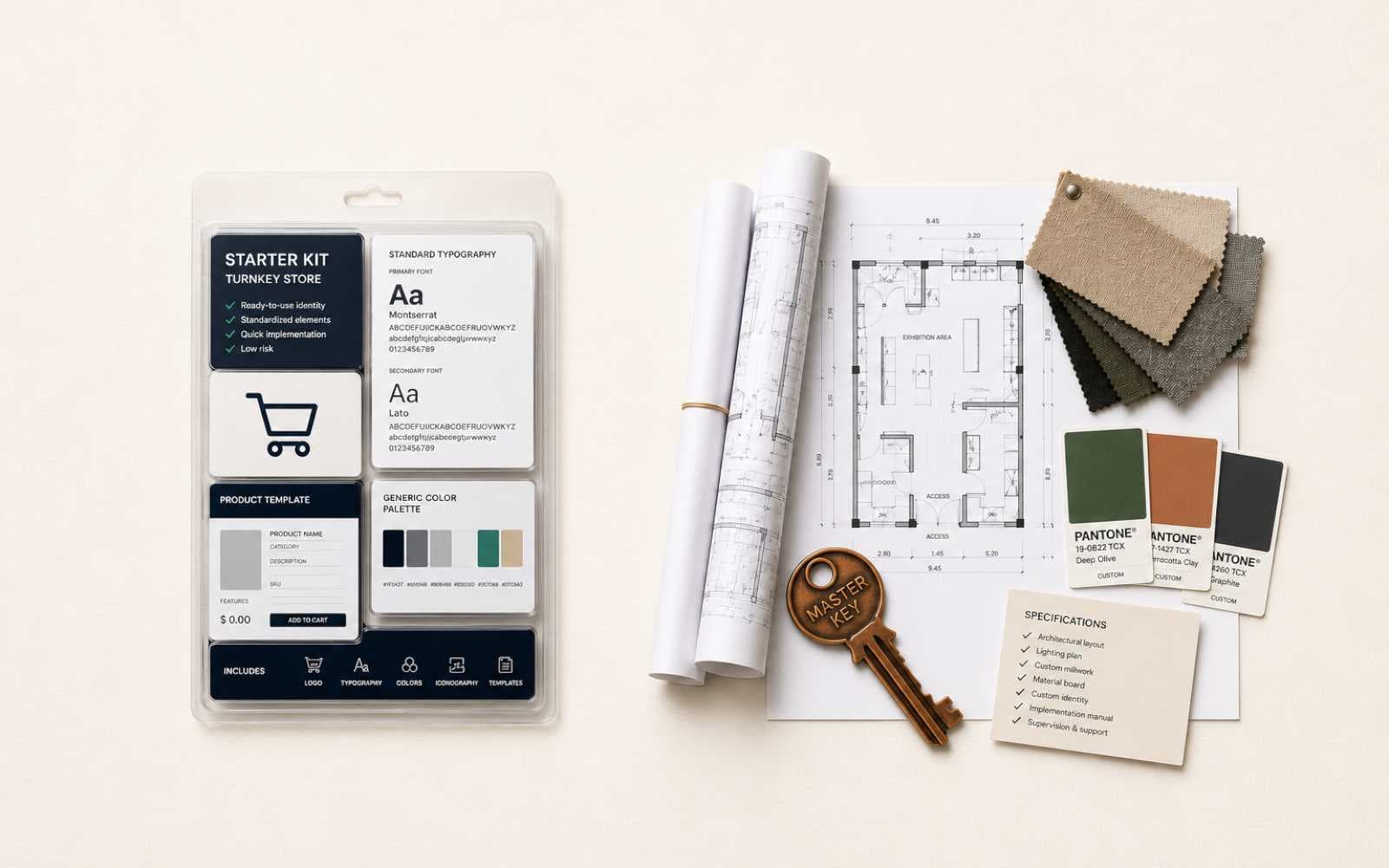
Tiendanube makes sense when you need to launch an online store quickly, reduce technical risk, and validate sales without building infrastructure from scratch. Custom development makes sense when your e-commerce operation is no longer just a catalog with checkout, but a strategic part of your business: custom pricing rules, complex integrations, differentiated shopping experiences, advanced SEO, or B2B workflows. This decision matters in Latin America: regional e-commerce is projected to reach USD 215.31 billion in 2026, growing 1.5 times faster than the global average, according to an Endeavor and MercadoLibre report cited by Reuters.
The right choice is not "the most powerful technology." It is the option that fits your business stage without creating unnecessary cost, complexity, or platform dependency.
Key Takeaways
- Tiendanube is usually better for validating and operating a standard online store without depending on a technical team.
- Custom development is justified when the store affects revenue, operations, margins, or differentiation.
- Custom is not automatically better. If demand is not validated yet, it can be premature.
- The real cost is not just the monthly fee or initial build: it also includes commissions, apps, maintenance, support, performance, and integrations.
- The decision can be progressive: start with a platform, then migrate or complement it with custom development when the business requires it.
The short answer: Tiendanube for validation, custom for differentiation
The simplest way to choose between Tiendanube and custom development is this:
Choose Tiendanube if you need to start selling quickly with low technical risk. Choose custom development if the way you sell, operate, or differentiate does not fit well inside a standard platform.
That does not mean Tiendanube is "basic" or custom is "advanced" by default. They solve different problems.
Tiendanube is an e-commerce platform designed to help brands create a store, upload products, accept payments, manage shipping, and operate without building everything from scratch. For many small businesses, entrepreneurs, and growing brands, that is exactly what they need.
Custom development, on the other hand, makes sense when the business needs deeper control: a specific shopping experience, custom pricing logic, deep integration with internal systems, carefully optimized performance, advanced technical SEO, or workflows that a closed platform cannot handle well.
Martin Fowler's distinction between utility and strategic software is useful here. If a capability does not differentiate your business, an existing package is often the logical choice; if it is strategic, using the same software as everyone else can limit differentiation.
Applied to e-commerce: do not build custom what does not differentiate you. But do not accept platform limits when those limits directly affect how you sell.
What Tiendanube solves well
Tiendanube makes sense when the main problem is launching, organizing operations, and starting to sell without turning the project into a large technical build.
Fast launch
For a new brand, speed matters. Not because everything should be rushed, but because before investing heavily, you need to validate whether the product sells, whether the price works, whether logistics are reliable, and whether the audience trusts the store.
A custom store can take weeks or months, depending on scope. A Tiendanube store can launch much faster if the catalog, branding, payment methods, and shipping setup are clear.
This is especially useful for businesses selling physical products, clothing, cosmetics, home goods, packaged food, simple courses, or basic digital products.
Payments, shipping, and management without a technical team
One of Tiendanube's main strengths is that it groups pieces that would otherwise need to be designed or integrated separately: cart, checkout, payment methods, product management, coupons, shipping, notifications, and admin panel.
For a small business without an internal technical team, this reduces friction. You do not need to hire a developer every time you want to change a product, activate a promotion, or review an order.
In Latin American markets, where payments, shipping, installments, digital wallets, and logistics vary significantly by country, this operational layer matters.
Regional ecosystem
Tiendanube also has contextual strength: it is built for Latin America. That makes it closer to local needs than some global platforms when a business needs payment methods, shipping, support, and integrations aligned with Argentina, Mexico, Colombia, or Chile.
According to Store Leads, as of August 2026 Tiendanube had 197,693 live stores and grew 33% year over year in Q2 2026. That does not prove it is the right solution for everyone, but it confirms that it is a relevant platform in the region.
More predictable initial costs
For a standard store, Tiendanube makes initial costs easier to estimate: monthly plan, template or design work, configuration, product upload, payment methods, shipping, and selected apps.
This does not eliminate all costs, but it reduces technical uncertainty. For a brand that is still validating demand, that predictability may be more valuable than total control from day one.
When Tiendanube starts to fall short
Tiendanube stops being the best option when the business starts working against the platform instead of being supported by it.
The signal is not simply "the store has grown." A store can grow significantly on Tiendanube if the operation still fits the platform. The real signal is different: every important improvement requires workarounds, apps, manual fixes, or compromises that affect sales, operations, or user experience.
Highly specific shopping experiences
Tiendanube allows customization, but it does not offer the same level of freedom as a custom-built interface.
If your store needs a very specific shopping experience — product configurators, dynamic quotes, calculators, advanced bundles, user-based personalization, segmented purchase flows, or interactive storytelling — a closed platform can start to feel limited.
A simple clothing brand probably does not need that at the beginning. But a company selling technical products, hybrid product-service offers, or complex catalogs may need a less generic experience.
Pricing, inventory, or promotion rules outside the standard model
Many stores begin with simple rules: price, discount, shipping, and coupon.
The problem appears when you need more specific logic:
- different prices by customer;
- inventory by branch;
- promotions with conditional rules;
- volume discounts;
- B2B price lists;
- minimum orders;
- quote requests before checkout;
- products assembled through combinations of variables.
When these rules become central to the business, forcing them into a platform can create errors, manual processes, or a confusing buyer experience.
Integrations with ERP, CRM, or internal systems
An online store does not operate in isolation. As the business grows, it often needs to connect with invoicing, inventory, CRM, logistics, customer support, analytics, or internal tools.
If those integrations are simple, a platform may handle them well. If they are deep or specific, custom development can make more sense.
For example, a store that only needs Mercado Pago, shipping, and Google Analytics can operate perfectly well on Tiendanube. But a company that needs to sync inventory across multiple locations, feed an ERP, show customer-specific prices, and trigger internal workflows probably needs a more controlled architecture.
App dependency, commissions, and platform limits
The cost of a platform is not just the monthly plan. It can also include apps, commissions, transaction costs, paid integrations, and configuration work.
Tiendanube states that in Argentina and Mexico, a transaction cost is generated when a sale is completed through the platform, ranging from 0.5% to 2% of the total sale value depending on the country and the plan — Argentina runs from 0.7% to 2%, while Mexico starts at 0.5% — except under specific conditions such as using Pago Nube.
That cost can be reasonable at the beginning. But as volume grows, it should be compared against the cost of a more owned solution. Not because custom will automatically be cheaper, but because the numbers should be evaluated honestly.
What custom development really means
Custom development should not mean "building everything from scratch for no reason."
A good custom build can use existing services, APIs, managed infrastructure, and modern tooling. The difference is that the architecture is designed around the business, not around the constraints of a template.
For example, a modern custom store can combine:
- Next.js for a fast, flexible, SEO-friendly frontend.
- Vercel for deployment, performance, and frontend infrastructure.
- Supabase for database, authentication, storage, or internal tools.
- Stripe, Mercado Pago, PayU, dLocal, or local payment gateways depending on country and operation.
- A headless CMS for editorial content, landing pages, or buying guides.
- Internal APIs to connect inventory, invoicing, CRM, or operational tools.
There is also a middle ground: hybrid or headless architecture. In that model, a platform can handle catalog, payments, or admin tasks, while the frontend is custom-built. It is not always worth it, but it can be useful when the business needs more visual or technical freedom without rebuilding the entire commercial operation.
Thoughtworks summarizes the build-vs-buy tradeoff clearly: buying software gives you proven capabilities quickly, with less customization and control; building gives you the opposite, but with more cost and effort.
That is the core tension between Tiendanube and custom development.
Direct comparison: Tiendanube vs custom development
| Criterion | Tiendanube | Custom development |
|---|---|---|
| Launch time | Low | Medium or high |
| Initial investment | Low or medium | Medium or high |
| Technical maintenance | Low | Requires technical ownership |
| Visual customization | Medium | High |
| Checkout control | Limited by platform | High |
| Complex integrations | Depends on ecosystem | More flexible |
| Advanced technical SEO | Good for basics | Greater control |
| Recurring costs | Plan, apps, possible commissions | Hosting, maintenance, support |
| Ownership | Partial | More control over code and infrastructure |
| Best for | Validating and operating a standard store | Differentiation, custom processes, integrations |
This comparison shows something important: custom does not win everywhere. It wins in control, flexibility, and differentiation. It loses in speed, simplicity, and initial cost.
So if a brand only needs a clear, trustworthy, well-configured store, Tiendanube may be the most rational decision. If the store needs to behave like a business-specific system, custom starts to make more sense.
The real cost: monthly fee, commissions, maintenance, and opportunity
The economic comparison between Tiendanube and custom development is often flawed.
Many people compare: "Tiendanube costs X per month" against "custom costs X once". That comparison is incomplete.
A custom store also has recurring costs: hosting, maintenance, monitoring, bug fixes, updates, improvements, security, API changes, support, and product evolution. If nobody owns that responsibility, the system deteriorates.
On the other side, a platform also has costs that grow with the business: monthly plan, apps, commissions, transaction costs, personalization limits, and provider dependency.
There is also a less visible cost: lost opportunity.
If you save on development but use a platform that does not support your sales flow well, you may lose conversion. If you pursue total control and take too long to launch, you may lose market learning.
This matters because cart abandonment remains high. Baymard Institute calculates an average documented cart abandonment rate of 70.22%, based on 50 studies. In that context, checkout clarity, mobile performance, cost transparency, and trust are not details.
Mobile is particularly important in Latin America: 84% of online purchases are made via smartphones, according to Endeavor and MercadoLibre via Reuters.
If your store loads slowly, the checkout is confusing, or costs appear too late, the technology choice becomes secondary: you are losing sales.
Concrete scenarios by business type
Scenario 1: new brand with 20 products
Recommendation: Tiendanube.
If you are starting with a simple catalog, building a full custom store does not make much sense. First, you need to validate product, price, margin, logistics, photos, content, advertising, and customer support.
A well-implemented Tiendanube store with clear branding, strong product pages, reliable payment methods, and basic analytics will probably give you a better return than premature custom architecture.
Scenario 2: clothing store already selling through Instagram
Recommendation: well-implemented Tiendanube.
Many brands start by selling through Instagram, WhatsApp, or marketplaces. At that point, a platform-based store can bring order: catalog, cart, payments, shipping, promotions, and buyer recovery.
The main issue is usually not technical. It is commercial: photos, sizes, exchanges, trust, shipping clarity, payment methods, and follow-up.
Tiendanube can solve enough without distracting the business with unnecessary development.
Scenario 3: company with a large catalog, branch-level stock, and commercial rules
Recommendation: evaluate custom or hybrid architecture.
When the catalog grows, inventory depends on locations, prices vary by channel, and the operation needs internal system synchronization, the store stops being just a storefront.
Here, custom can make sense because the complexity already exists in the business. The question is not "can we do this in Tiendanube?" but "what does it cost to sustain this properly inside Tiendanube without operational friction?"
Scenario 4: B2B business with customer-specific prices and order approval
Recommendation: custom probably makes more sense.
B2B usually requires flows that do not always fit a standard store: customer-specific pricing, quote requests, recurring orders, internal approvals, users with permissions, payment terms, credit limits, or sales team integration.
Forrester predicted that in 2025 more than half of large B2B transactions of USD 1 million or more would be processed through digital self-service channels, including vendor websites or marketplaces. This confirms that B2B e-commerce is not a minor function. It can be a strategic channel.
If digital B2B sales are a meaningful part of the model, custom development deserves serious evaluation.
Scenario 5: brand with a strong SEO and content strategy
Recommendation: it depends; custom or headless may be better.
If the store only needs to rank basic product and category pages, Tiendanube may be enough.
But if the strategy includes guides, comparison pages, programmatic content, editorial sections, segment-specific landing pages, complex filters, advanced information architecture, or extreme performance requirements, a stack like Next.js can offer more control.
That does not mean custom automatically ranks better. It means it gives you more control over structure, speed, metadata, content, rendering, schema markup, routes, internal linking, and mobile experience.
A practical decision rule
Use this matrix.
Choose Tiendanube if:
- you need to start selling quickly;
- you have a standard catalog;
- you do not have an internal technical team;
- your commercial operation is simple;
- your differentiation is product, brand, content, or advertising;
- you want lower initial risk;
- you are still validating demand.
Choose custom development if:
- your store needs custom business rules;
- checkout or shopping experience is part of your differentiation;
- you need deep integrations with internal systems;
- you have B2B flows, quotes, or user permissions;
- performance and technical SEO are critical;
- platform commissions, apps, or limits already affect margin or operations;
- you have enough clarity to invest in a more owned solution.
Do not choose custom if:
- you still do not know whether people will buy;
- your processes are not clear;
- you want to avoid maintenance;
- you want "something proprietary" only for perceived status;
- you do not have budget for support after launch.
Do not choose Tiendanube if:
- the platform forces you to change too much of your operation;
- you depend on too many apps for core functionality;
- you cannot implement a key experience needed to sell;
- variable costs already weigh too much;
- you need technical control the platform cannot provide.
FAQ
Is Tiendanube good for larger businesses?
Yes, it can be, if the operation fits the platform. Business size is not the only criterion. Complexity matters more: catalog, commercial rules, integrations, purchase flows, logistics, and control requirements.
Does custom development eliminate commissions?
Not necessarily. You may reduce or avoid some platform fees, but you will still pay payment gateway fees, infrastructure, maintenance, and technical support. Custom does not mean "no costs." It means more control over where and how costs appear.
Can I start with Tiendanube and migrate later?
Yes. For many brands, that is the most sensible path: start with a platform, validate sales, then migrate or complement it with custom development when there are clear commercial reasons. The key is not building your first store as if you already had a complex enterprise operation.
Which is better for SEO: Tiendanube or custom?
It depends on the SEO level you need. For basic product and category SEO, Tiendanube can be enough. For advanced strategies involving programmatic content, extreme performance, custom architecture, detailed schema, or specific landing pages, custom development can provide more control.
When does headless architecture make sense?
It makes sense when you want to keep a platform for some commercial functions but need more freedom in the frontend, experience, performance, or content. It is not for everyone: it adds complexity and should be justified by concrete goals.
How much should a small business invest in its first online store?
It depends on the stage. If demand is not validated, initial investment should be controlled. If the business already has sales, clear processes, and the store directly affects margins or operations, investing more in design, performance, automation, or customization can make sense.
Conclusion
Tiendanube and custom development are not enemies. They are tools for different stages and problems.
Tiendanube makes sense when you need to sell quickly, operate with less technical friction, and validate without taking on a large upfront investment. Custom development makes sense when your store stops being a generic sales channel and becomes a central part of how you sell, operate, or differentiate.
The right decision is not always the most complex one. It is the one that fits the real stage of the business.
At Senda Lógica, an honest evaluation would start with that question: do you need a fast platform-based store, a better-planned implementation, or a custom solution with more control? Not every business needs custom development. But when it does, it should be done with technical judgment, clear scope, and real commercial objectives.
Sources Consulted
- Store Leads — The State of Tiendanube: live stores and year-over-year platform growth. Continuously recalculated. (storeleads.app)
- Tiendanube — How per-transaction costs are calculated in Argentina. (ayuda.tiendanube.com)
- Tiendanube — What per-transaction costs are in Mexico. (ayuda.tiendanube.com)
- Baymard Institute — Average documented cart abandonment rate, calculated across 50 studies. (baymard.com)
- Forrester — B2B Marketing & Sales Predictions 2025: large B2B transactions processed through digital self-serve channels. (investor.forrester.com)
- Reuters — Latin American ecommerce projection and the weight of mobile in the region. (finance.yahoo.com)
Table of contents
- Key Takeaways
- The short answer: Tiendanube for validation, custom for differentiation
- What Tiendanube solves well
- Fast launch
- Payments, shipping, and management without a technical team
- Regional ecosystem
- More predictable initial costs
- When Tiendanube starts to fall short
- Highly specific shopping experiences
- Pricing, inventory, or promotion rules outside the standard model
- Integrations with ERP, CRM, or internal systems
- App dependency, commissions, and platform limits
- What custom development really means
- Direct comparison: Tiendanube vs custom development
- The real cost: monthly fee, commissions, maintenance, and opportunity
- Concrete scenarios by business type
- Scenario 1: new brand with 20 products
- Scenario 2: clothing store already selling through Instagram
- Scenario 3: company with a large catalog, branch-level stock, and commercial rules
- Scenario 4: B2B business with customer-specific prices and order approval
- Scenario 5: brand with a strong SEO and content strategy
- A practical decision rule
- Choose Tiendanube if:
- Choose custom development if:
- Do not choose custom if:
- Do not choose Tiendanube if:
- FAQ
- Is Tiendanube good for larger businesses?
- Does custom development eliminate commissions?
- Can I start with Tiendanube and migrate later?
- Which is better for SEO: Tiendanube or custom?
- When does headless architecture make sense?
- How much should a small business invest in its first online store?
- Conclusion
- Sources Consulted